GEDAM MARIAM TSION - ADI QUALA
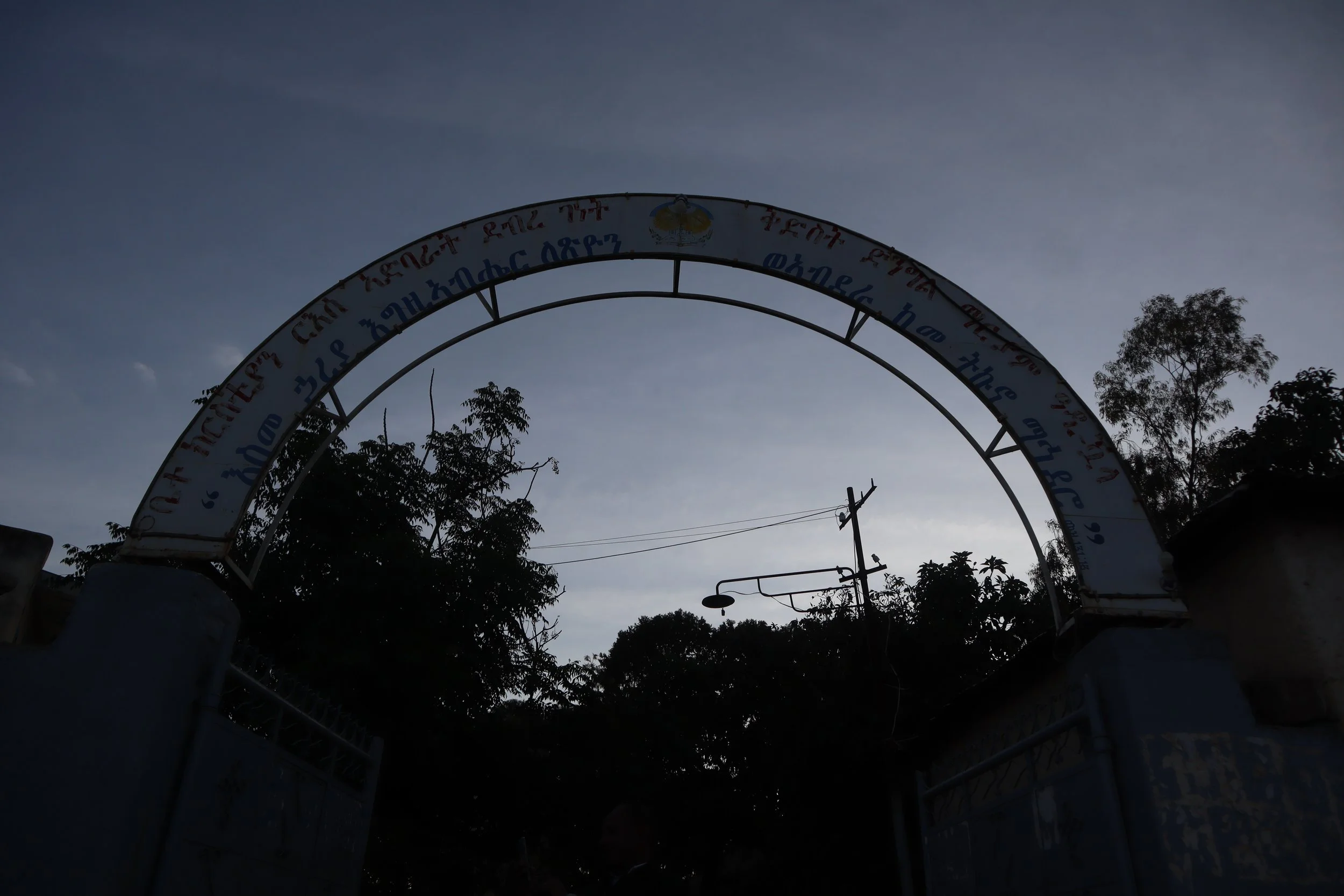
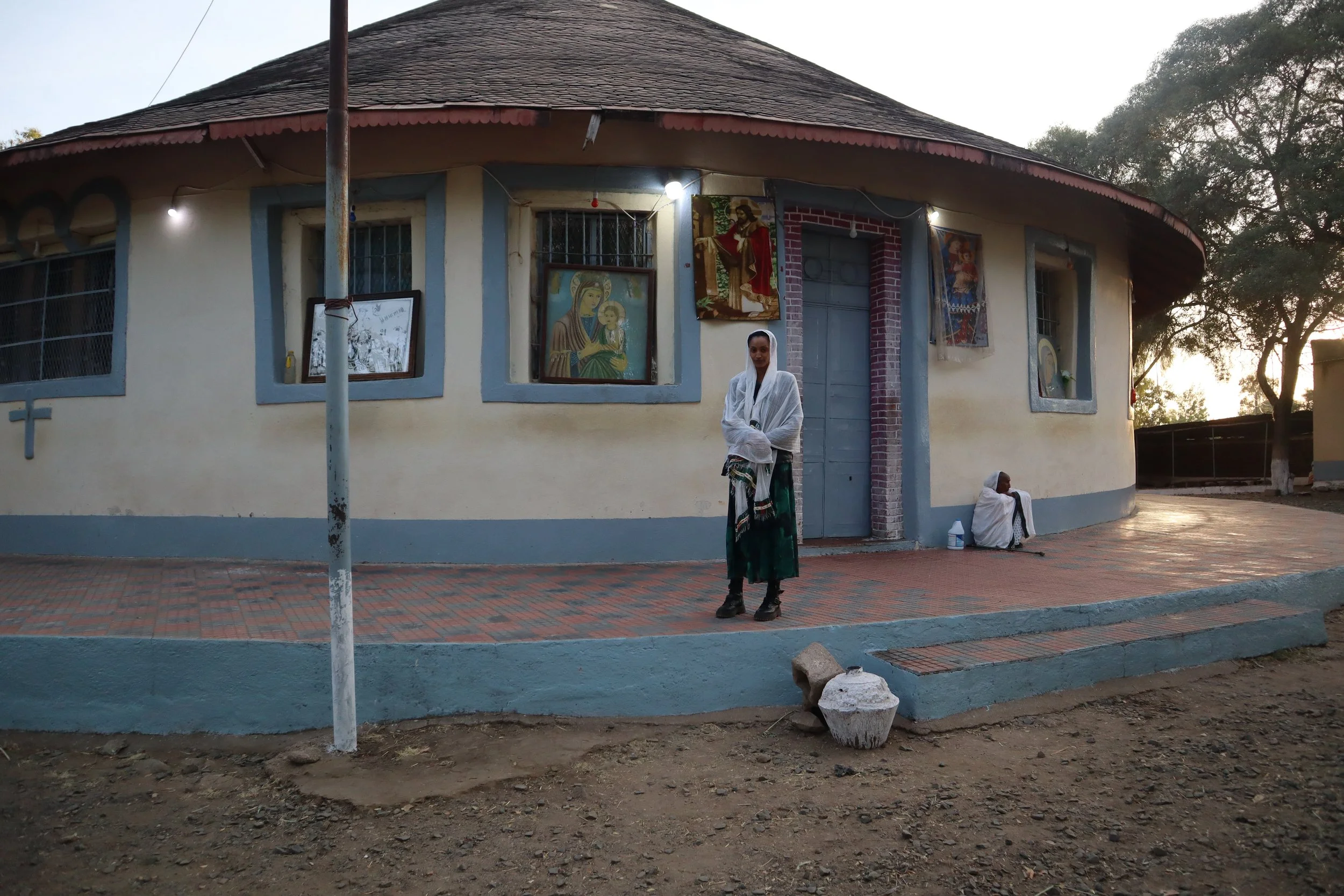
Gedam Mariam Tsion.
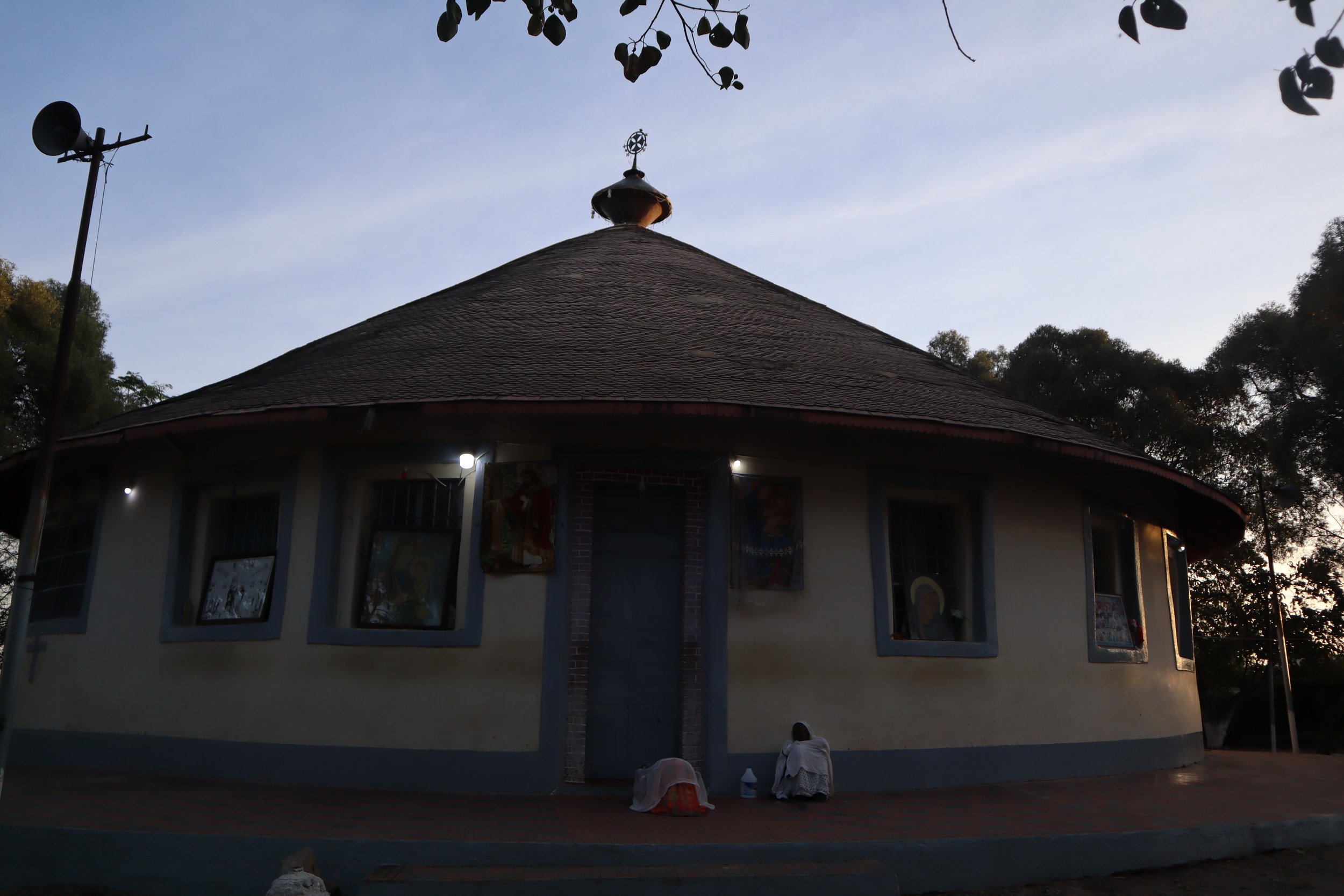
Mariam Tsion Monastery is located in Adi Quala, said to be founded during the 17th century at the same time the Cathedral of Mariam Tsion was constructed in Axum. Within the surrounding walls of the monastery lies the circular church, a bell tower, and another building used for schooling and choir practice. The center of the church consists in a square Maqdas covered by curtains surrounded by a circular wall. There’s a thin walkway going around, however there is no room for believers to actually sit inside.
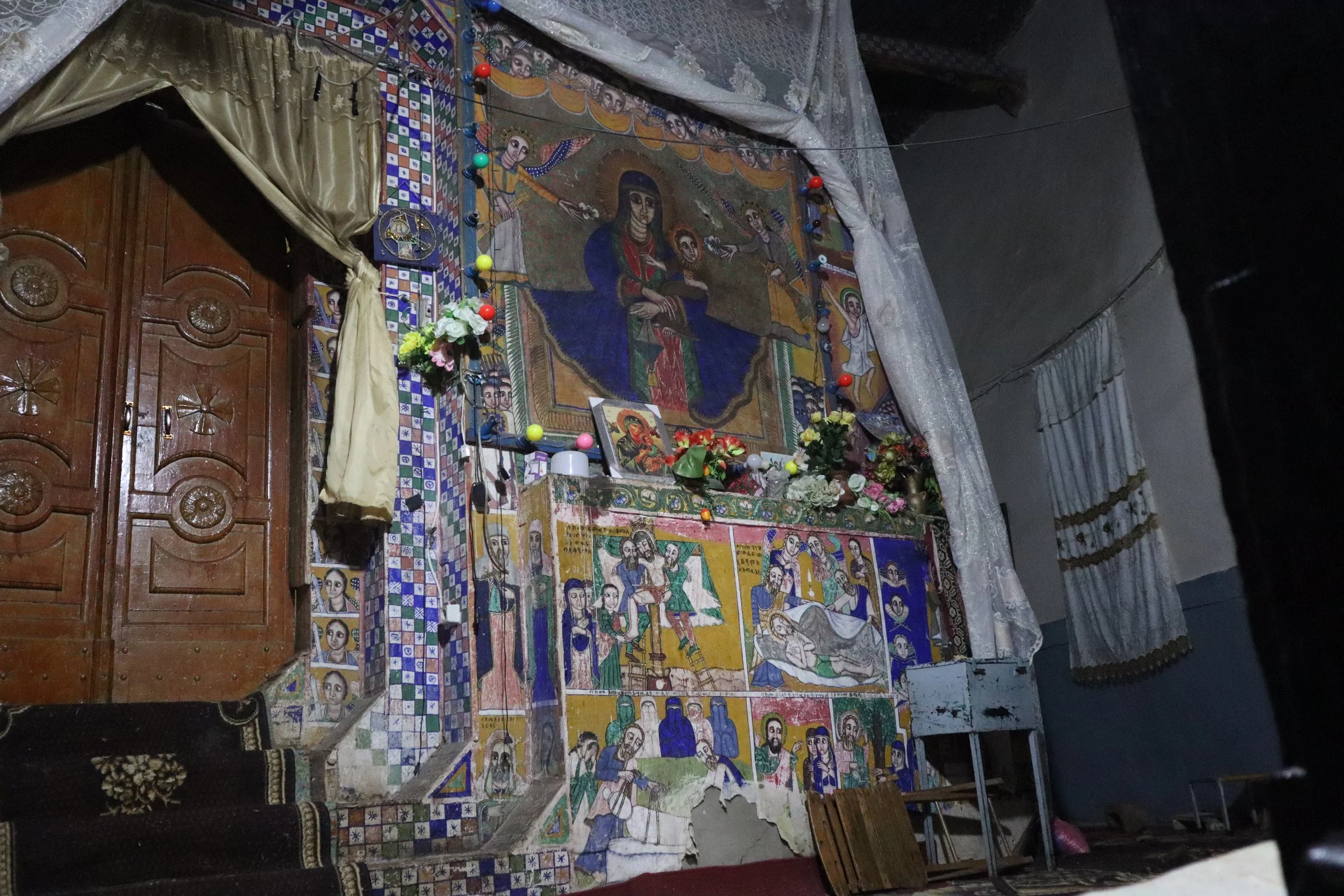
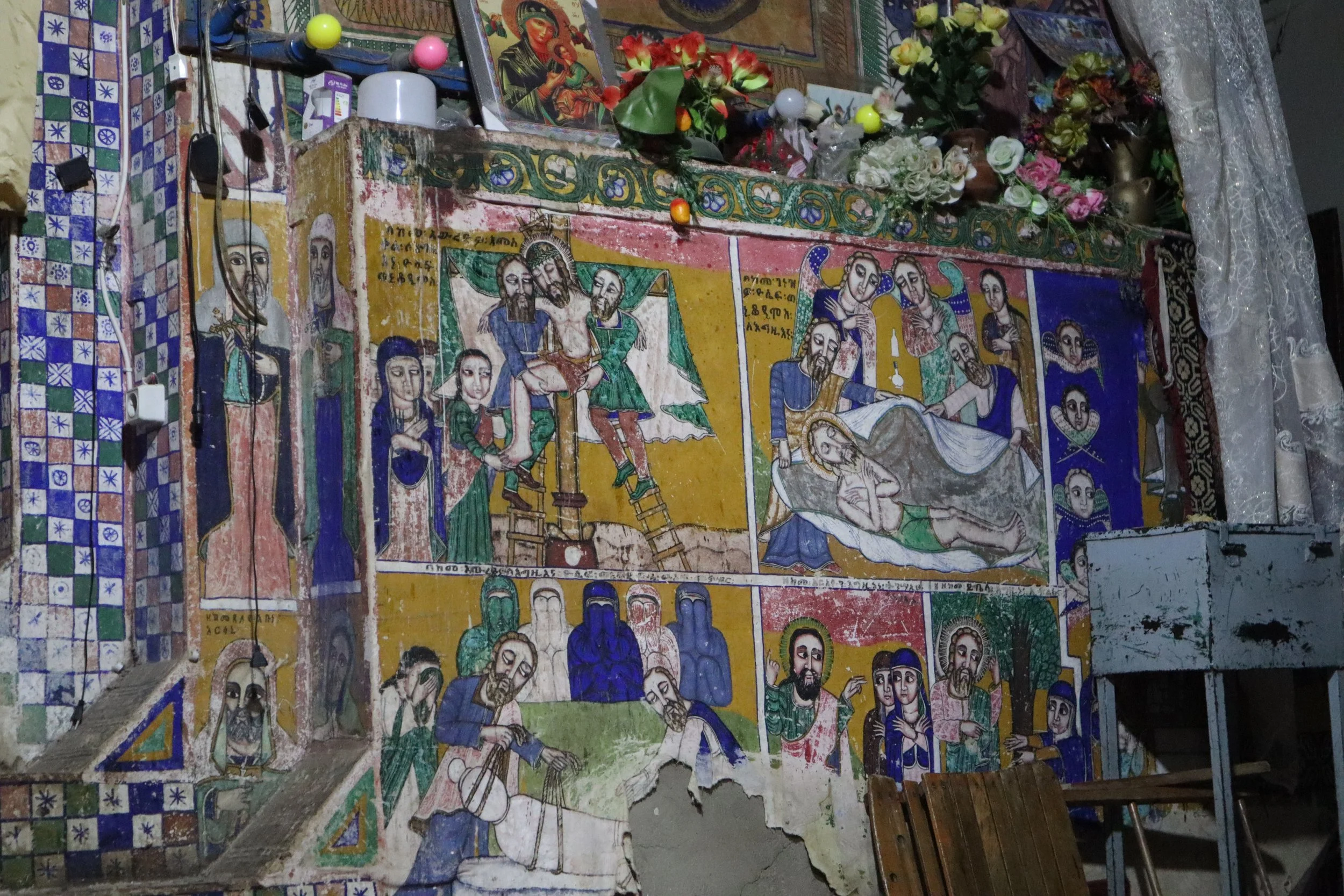
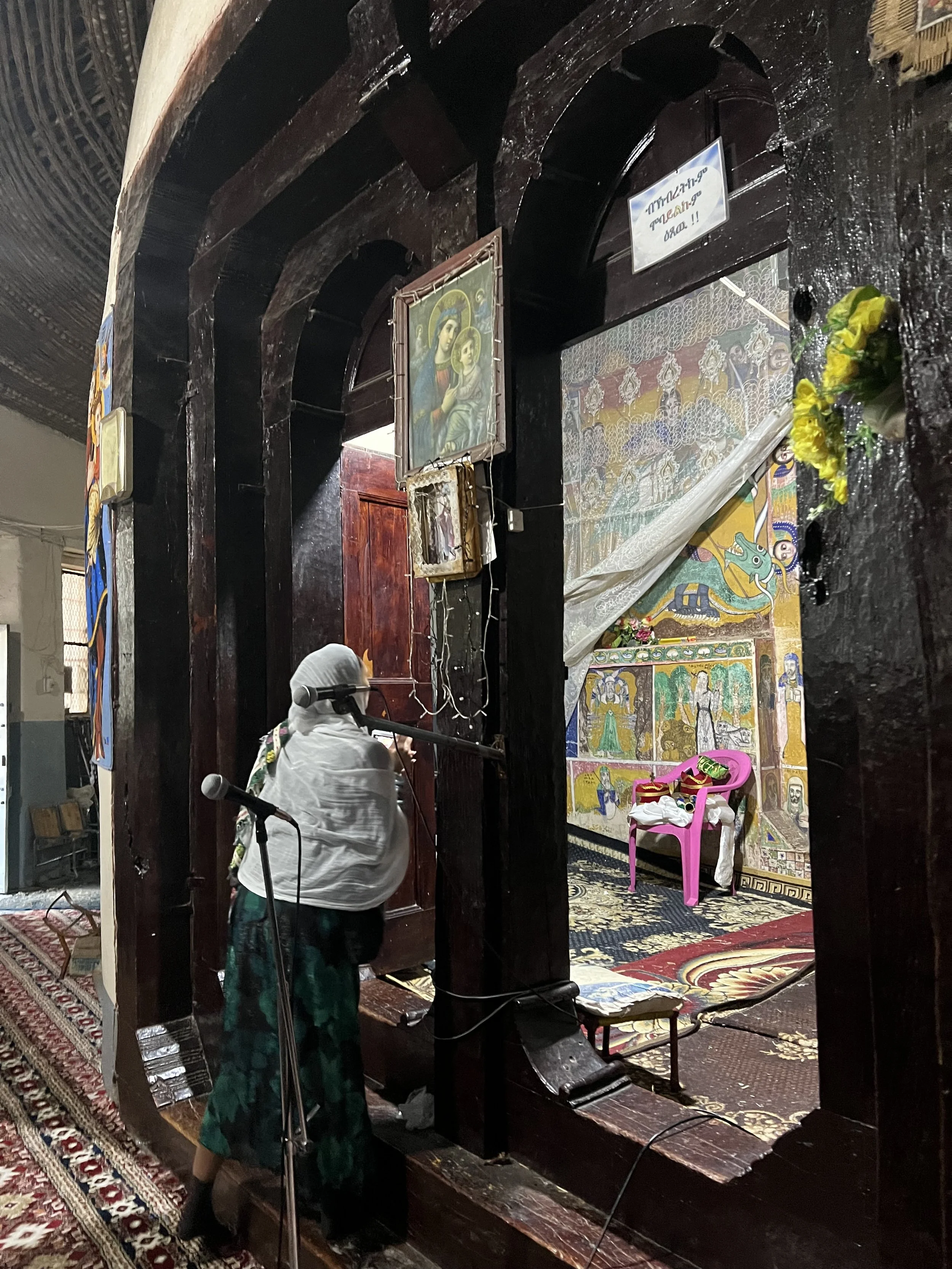
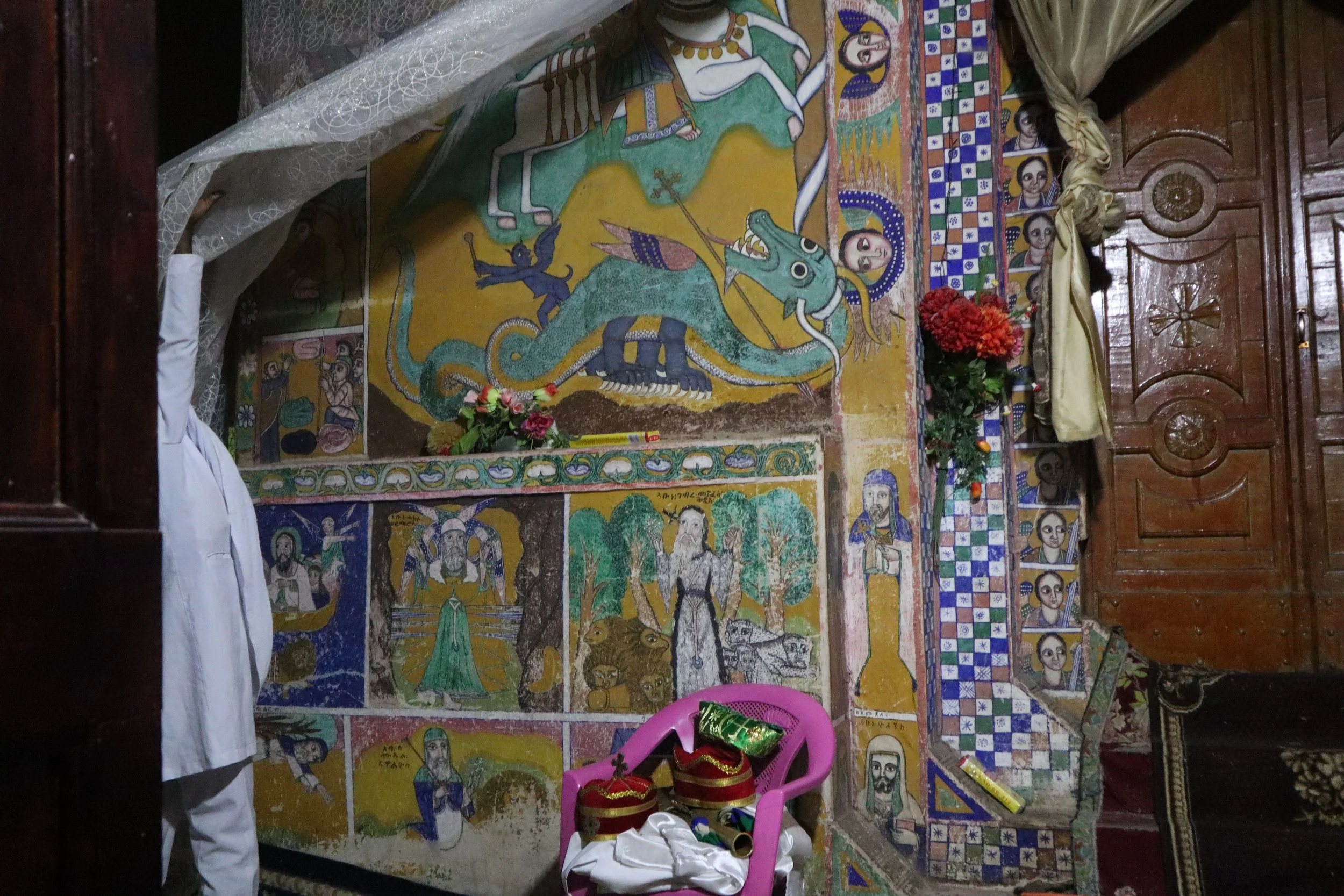
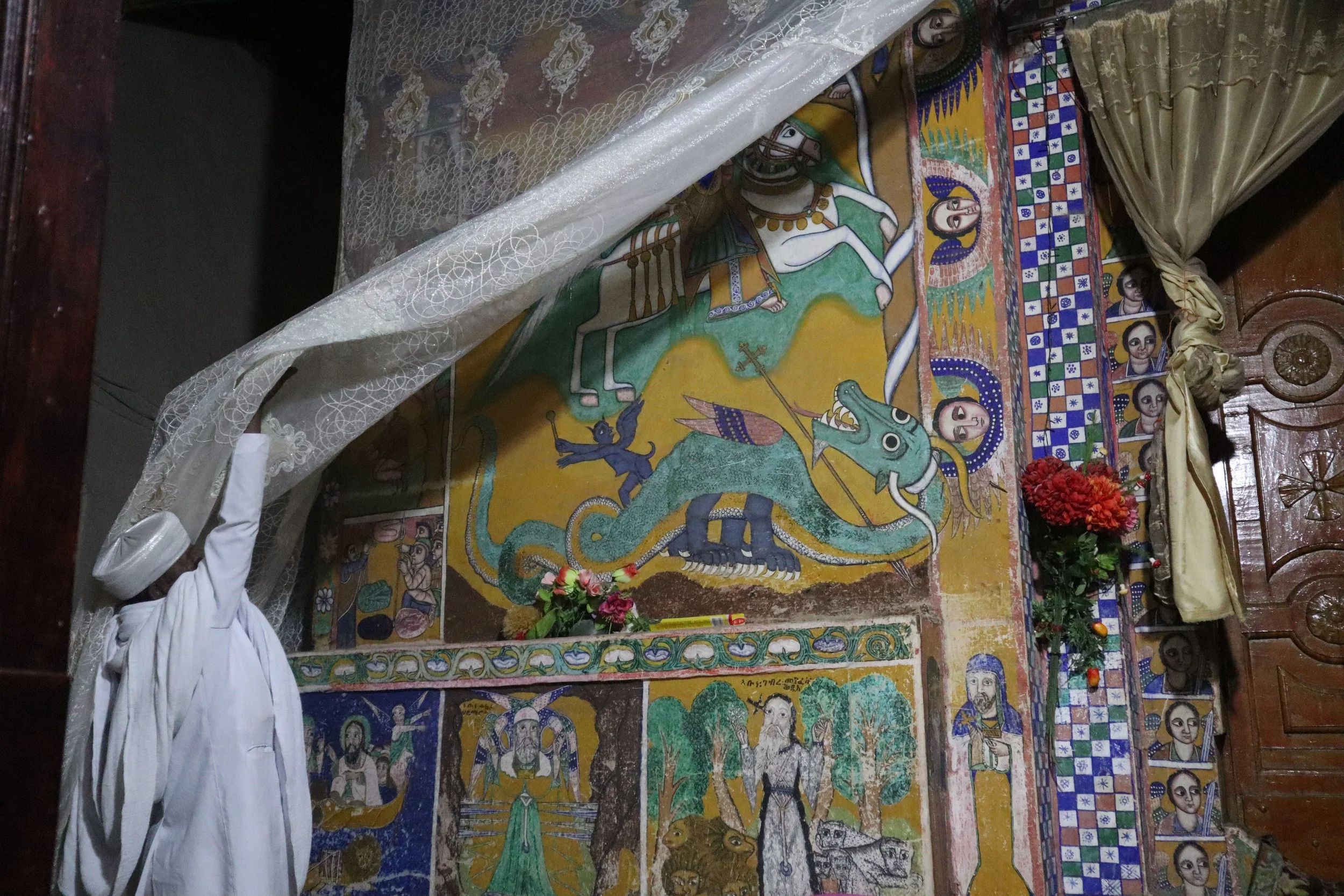
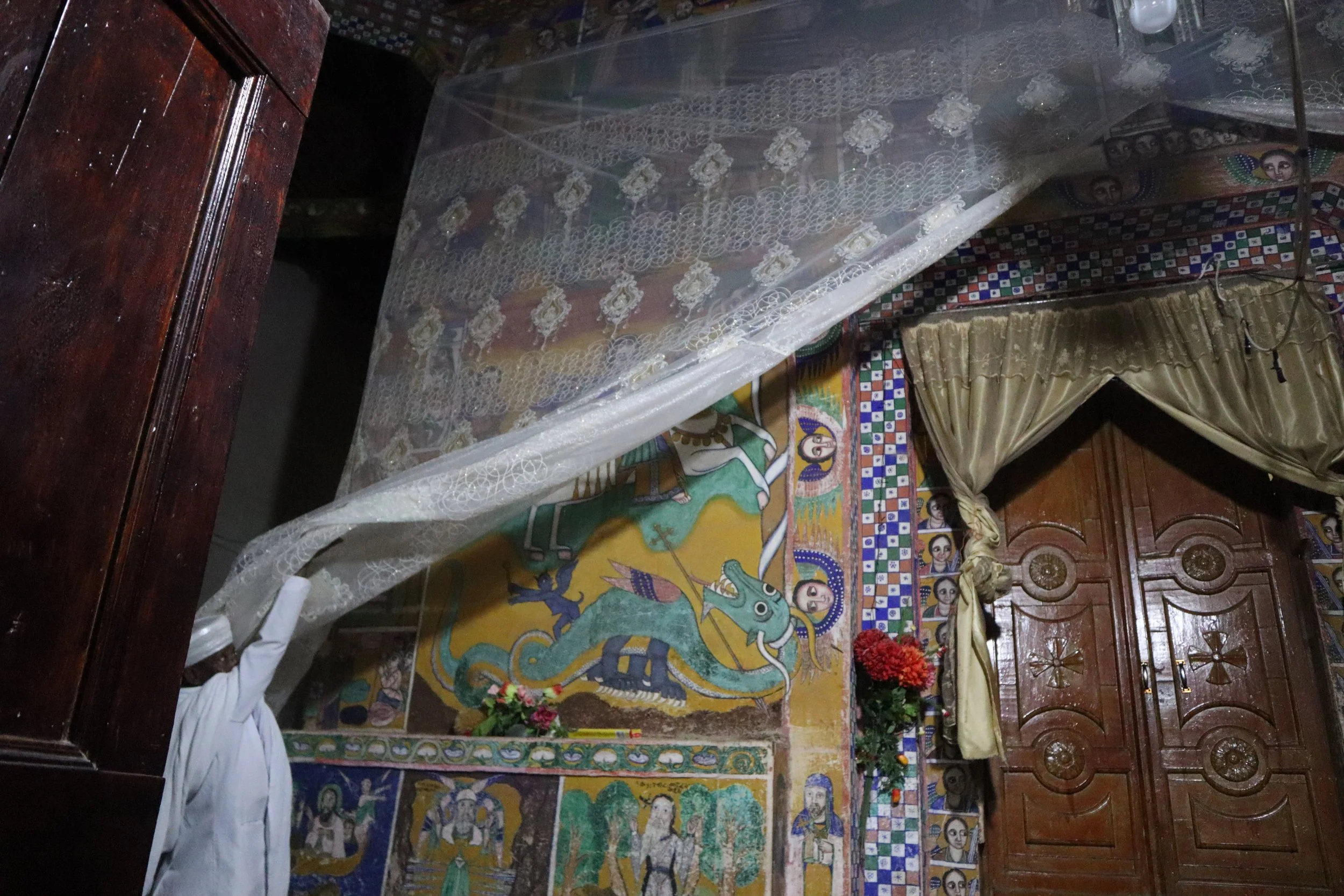
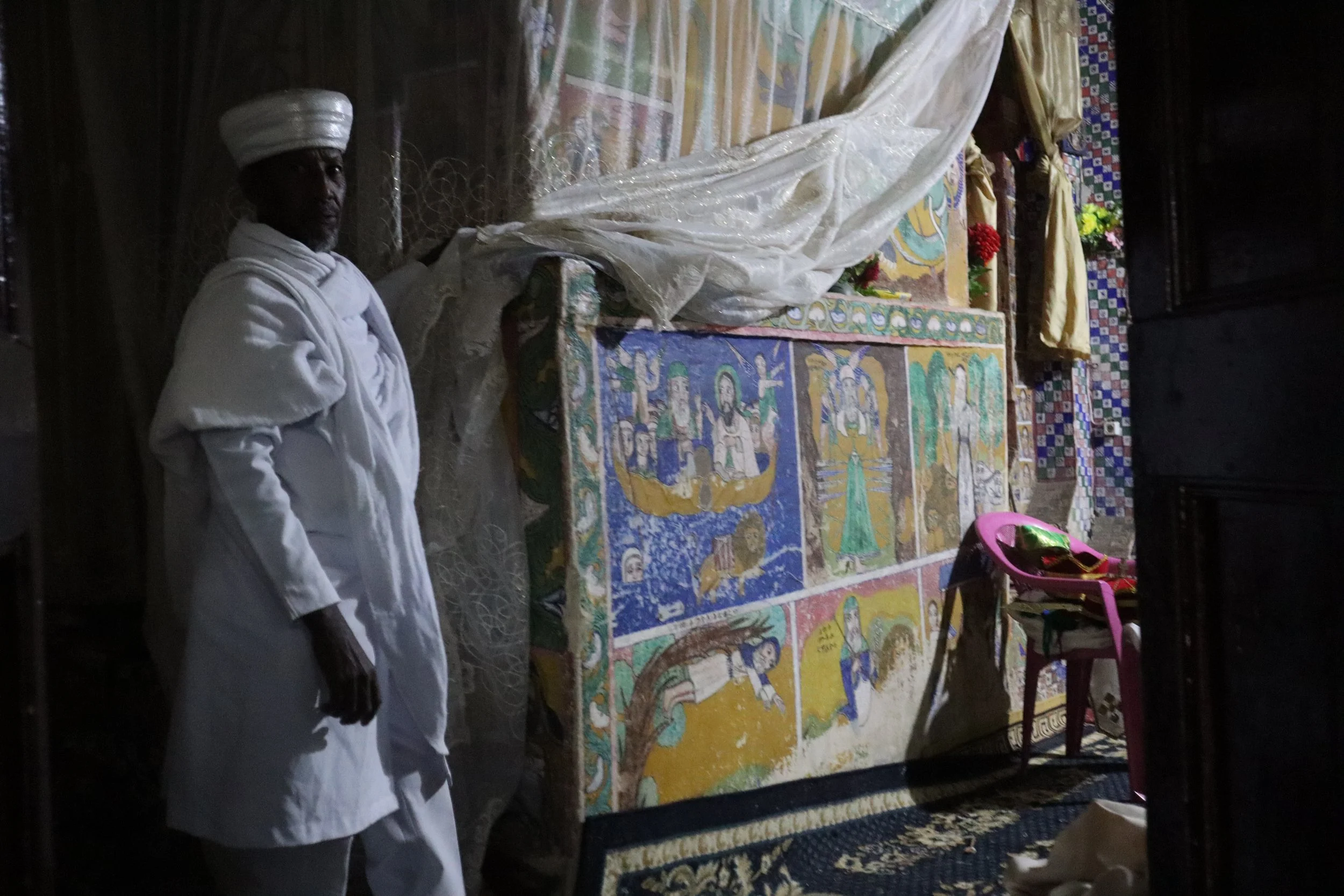
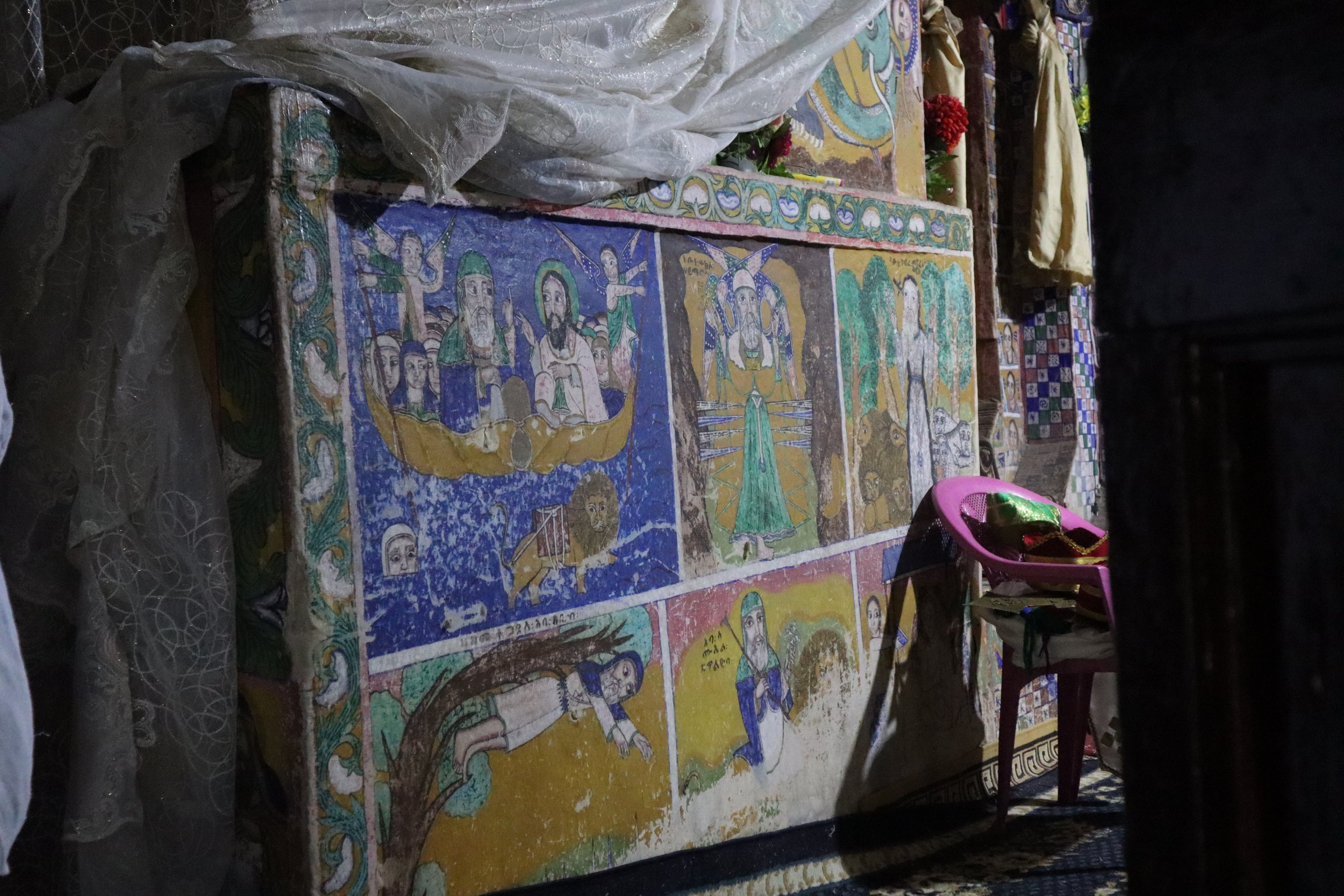
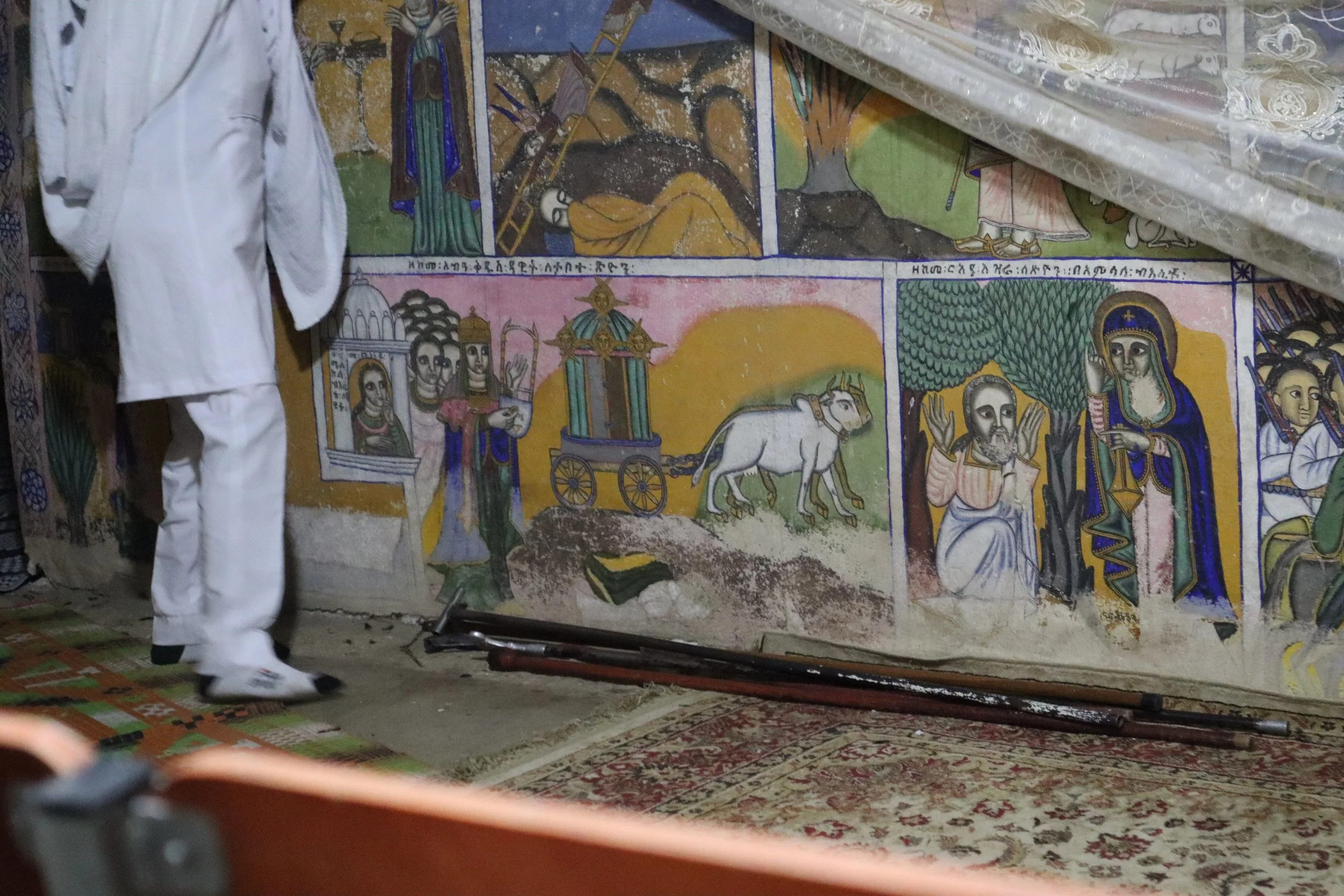
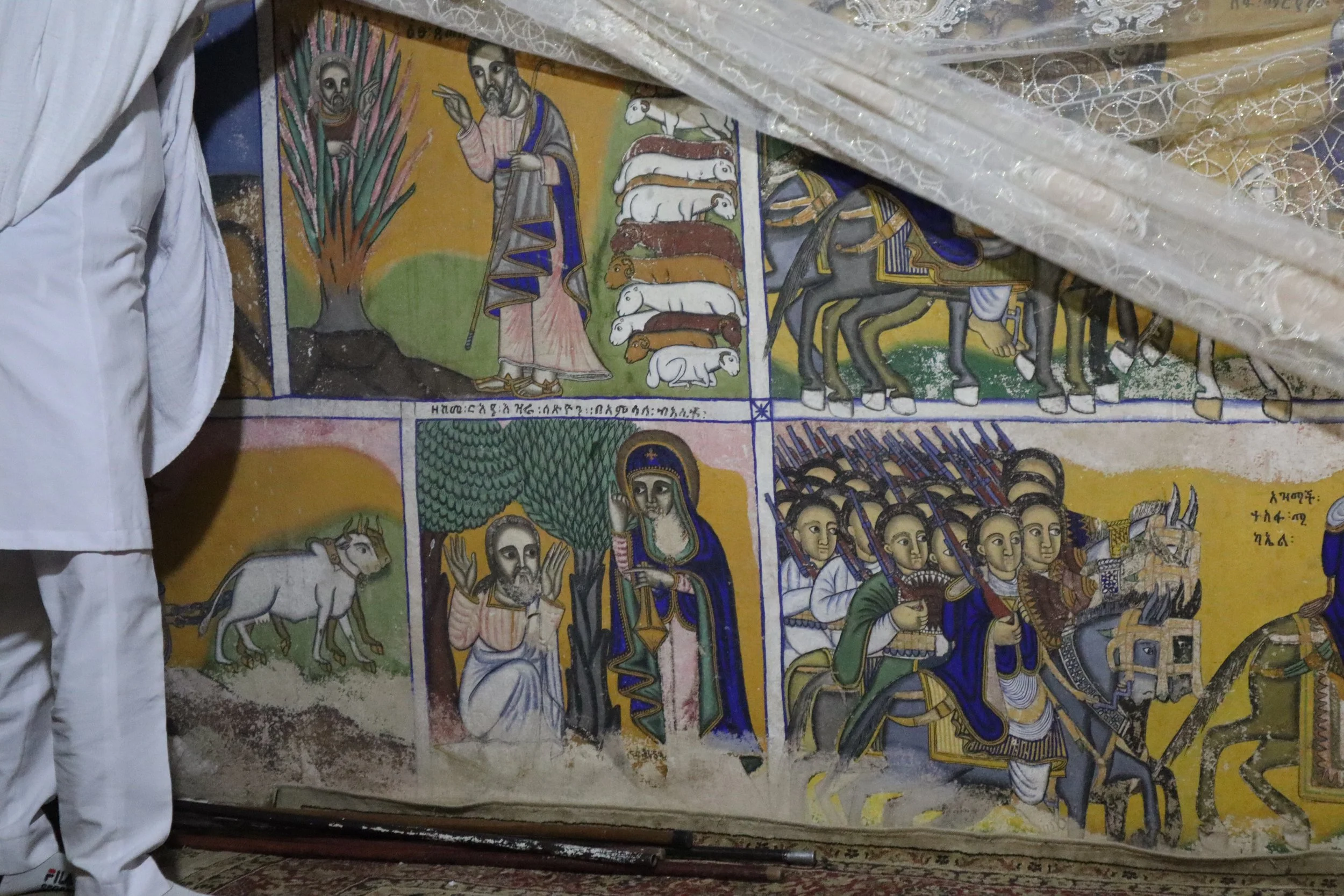
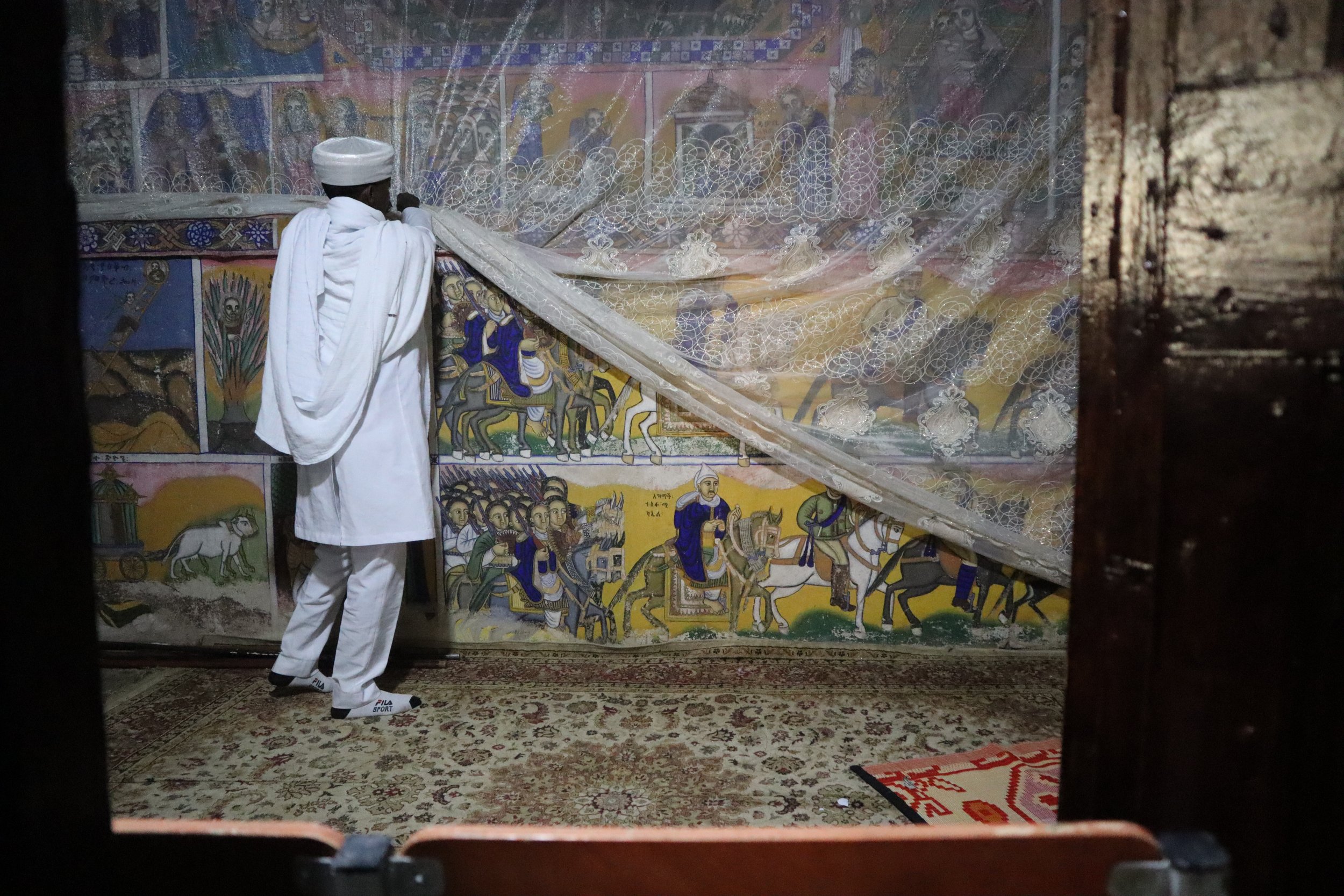
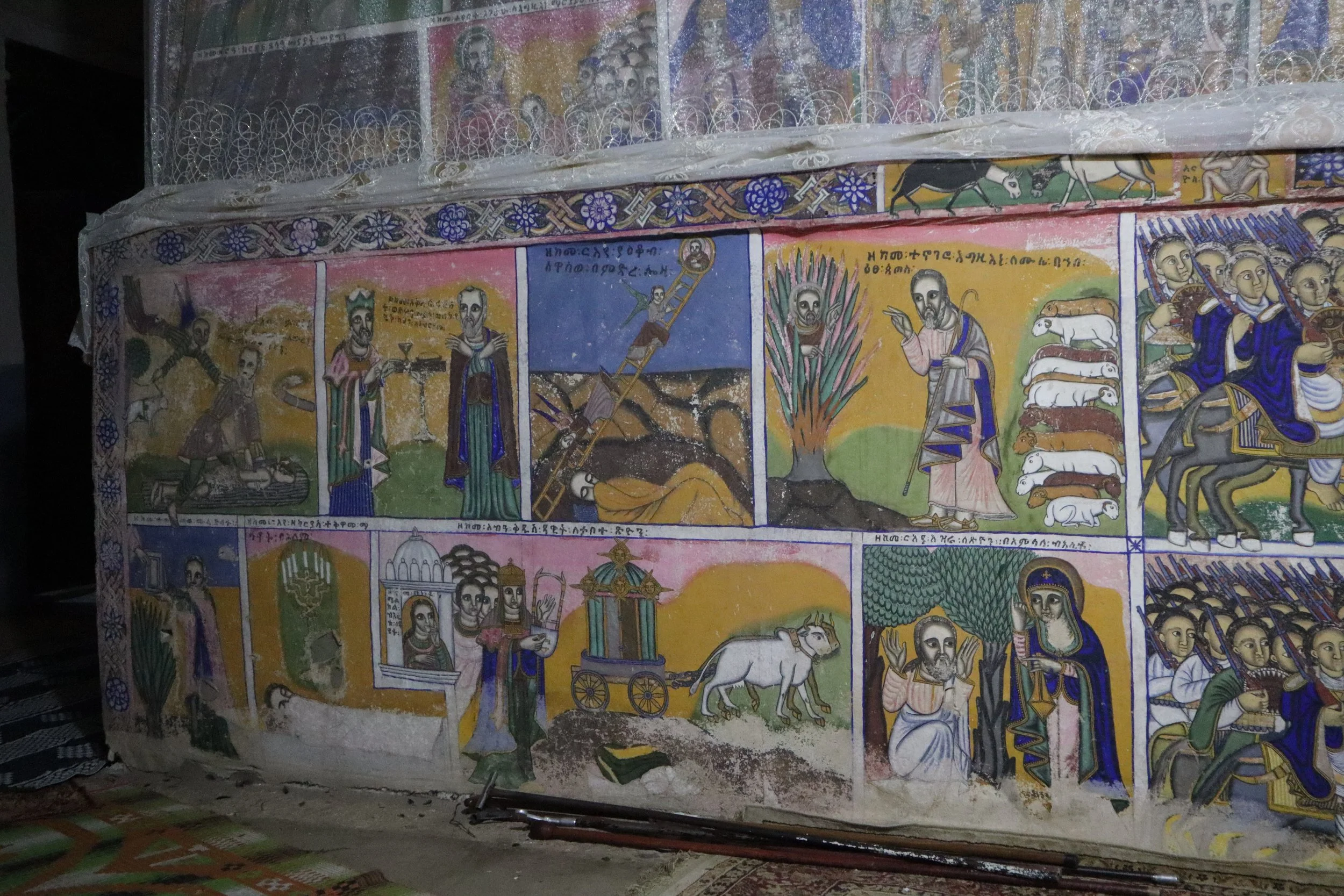
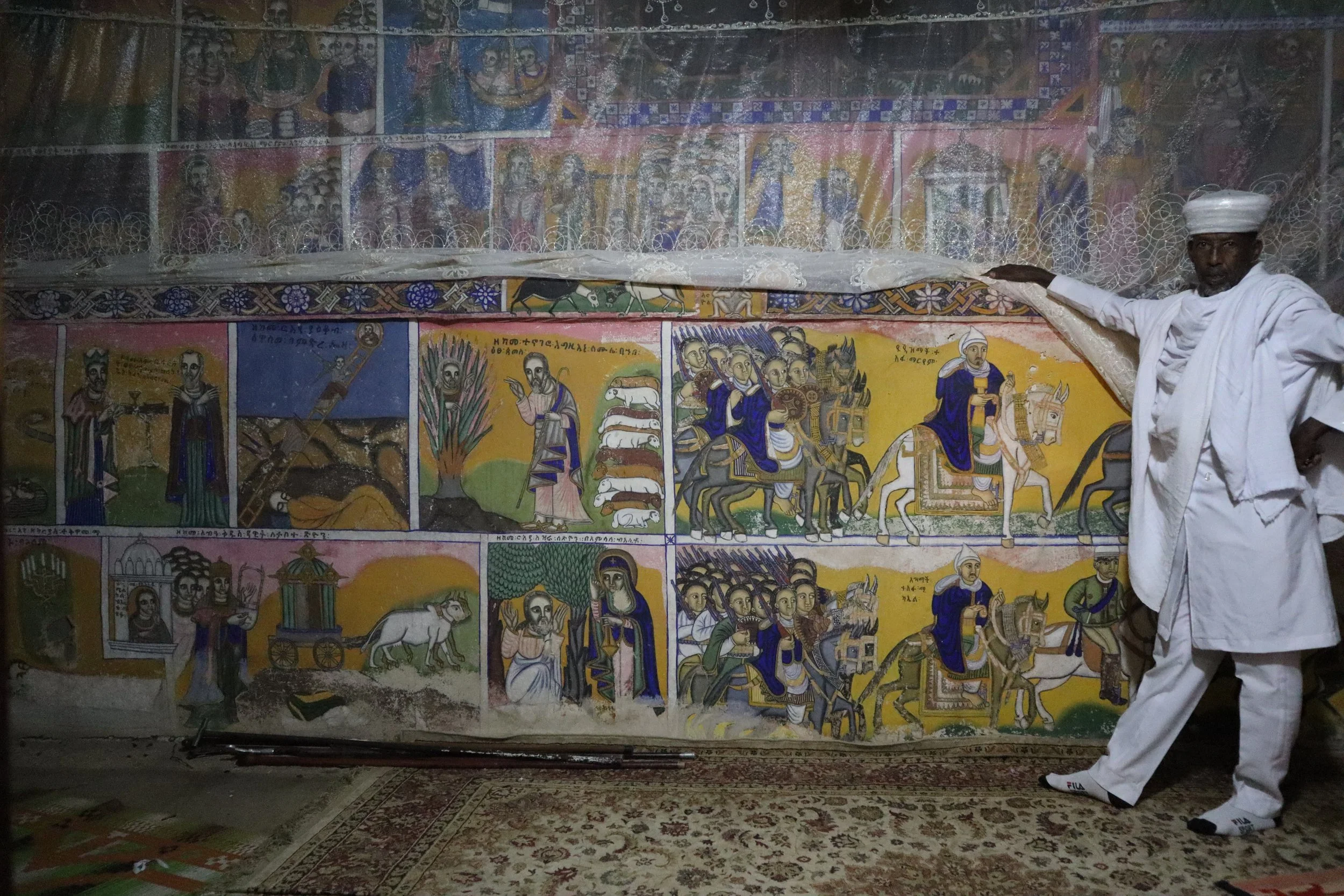
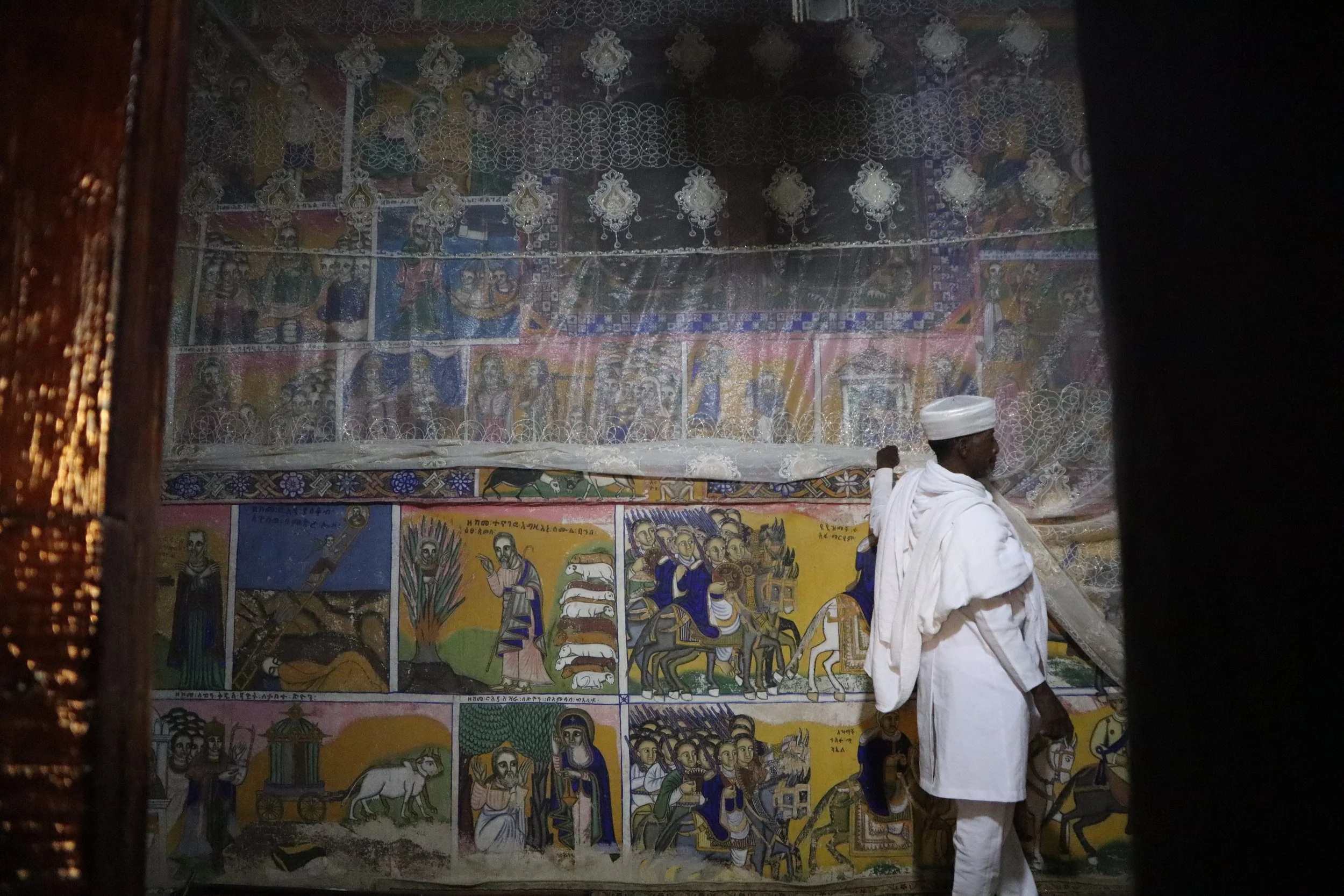
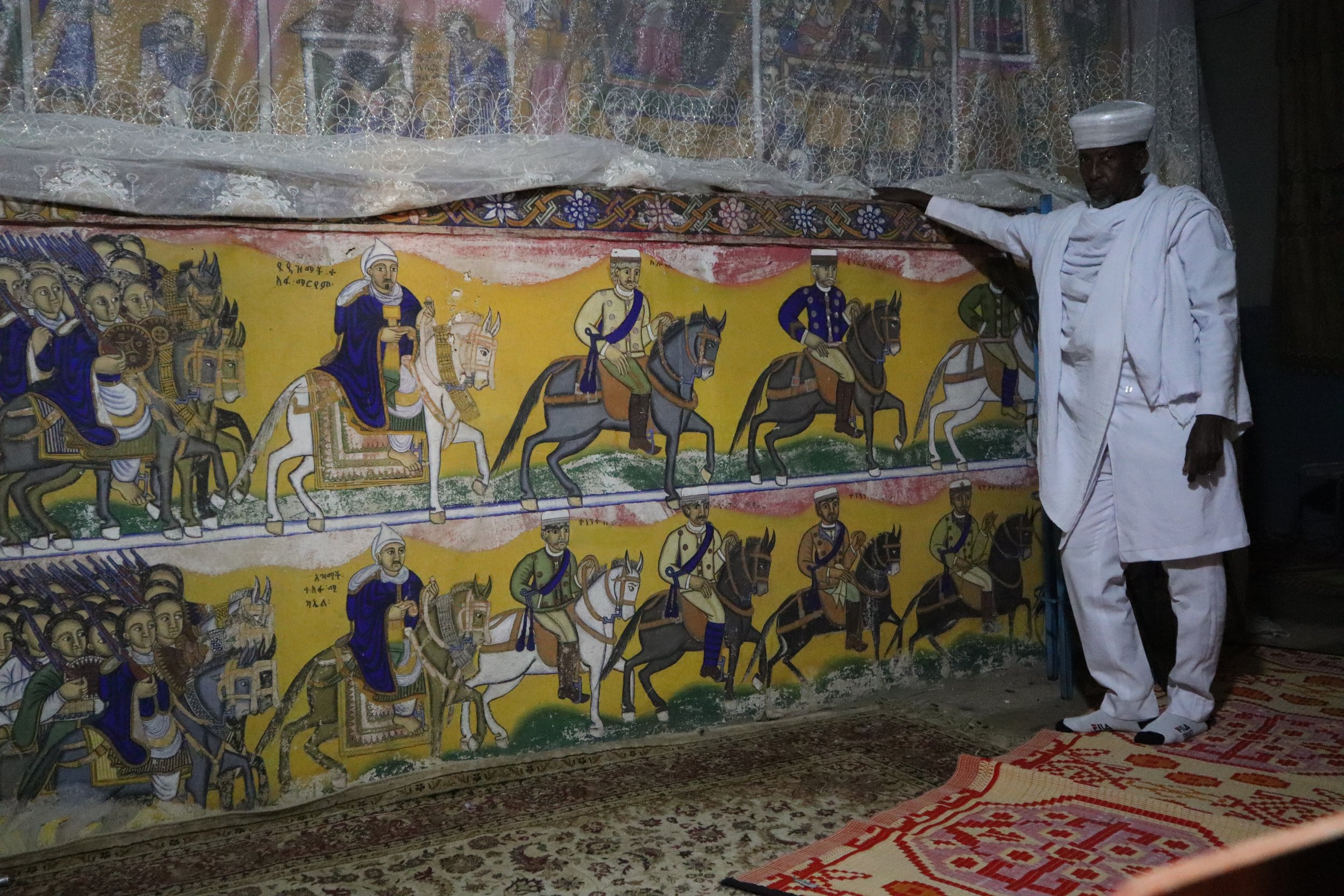
The walls of the interior Maqdas are painted from top to bottom in vibrantly colored illustrations detailing moments from the Bible, the life of the Virgin Mary, as well as periods of Eritrean political history.
Excerpt from my journal:
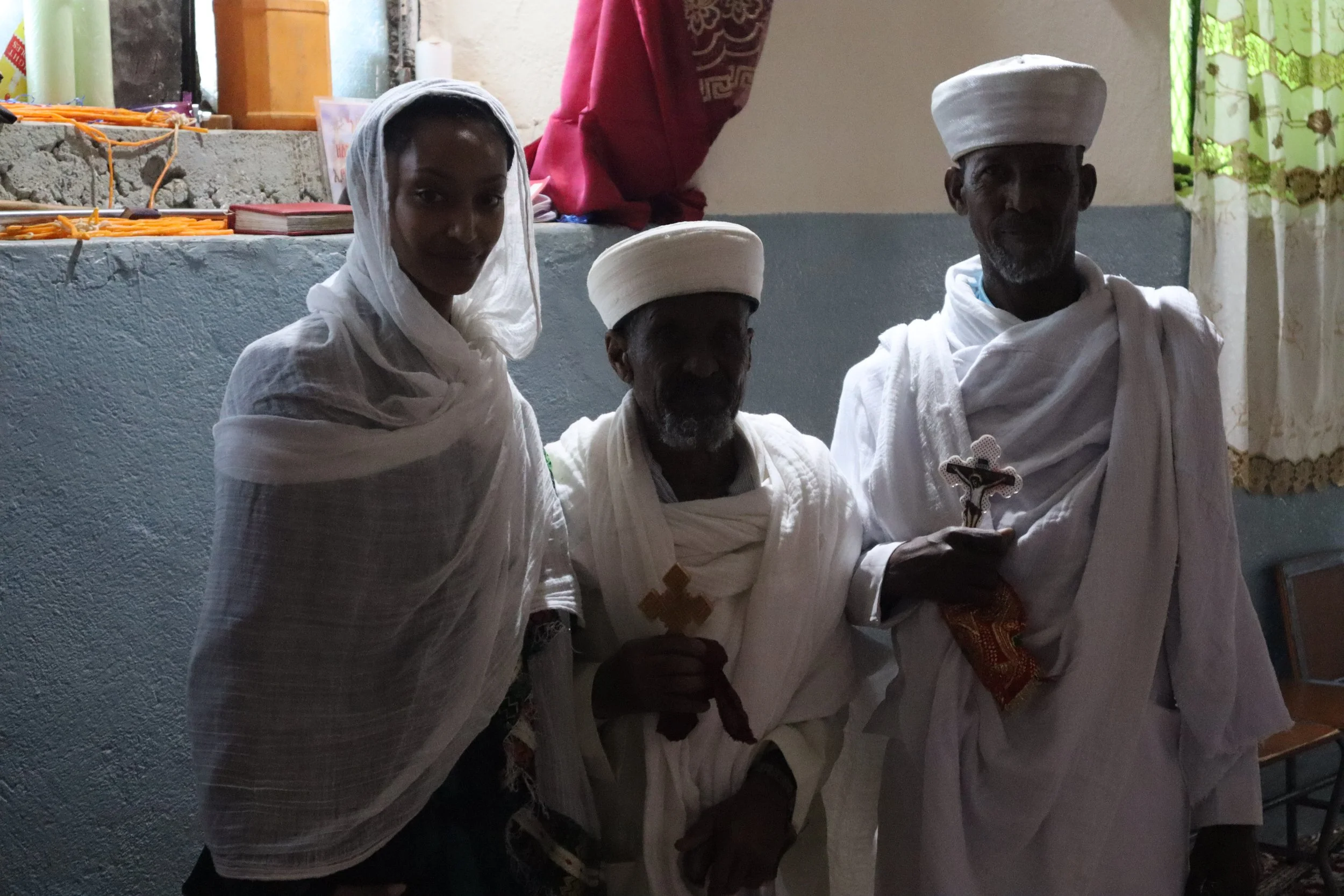
“Since the inside of the church is so small, its usually closed off except for a side door for the male priests. My uncle walked up and asked the Keshi if I would be able to walk through quickly and take a few pictures. The priest hesistated a little, then gestured for me to enter through the opposite end (the women’s entrance). That door was initially locked however I heard the metal lock clunk and the gate slowly opened.
I was immediately in awe of the art encompassing the walls…this tiny monastery held stunning preservations of orthodox art I’ve only seen in digital archives and books. Tears. Immediately.
I initially planned to only take photos of the Virgin Mary in the center-front of the Maqdas. I think the Keshi could sense my reverence and rather than rushing me, he began lifting the curtains revealing artworks I wasn’t even aware of. Tears.
In some artworks are Arius excommunicated by the Council of Nicaea in 325, Abba Abib crossing the Red Sea on a raft made of animal skin, while other registers include moments of political strife in Eritrea from the Italian invasion. These artworks not only preserve the religious icons of the church, they hold in memory prominent people of Eritrean history like war-leaders Dejezmat Bahta Hagos of Segenyeti.